The Crimson Thread Part 2: Jesus in Genesis
Note: This is part 2 of our series, The Crimson Thread: Tracing the Gospel From Genesis to Revelation. Click here to begin with Part 1: The Miracle of The Bible
The First Gospel
Now that we have had a bird’s-eye view of how wonderfully the Bible fits together, let’s take a closer look at God’s plan of salvation. In the Old Testament (OT), we find statements and events that look forward to their fulfilment in Jesus Christ. The Bible calls them “shadows,” as in Colossians 2:17; Hebrews 8:5 & 10:1.
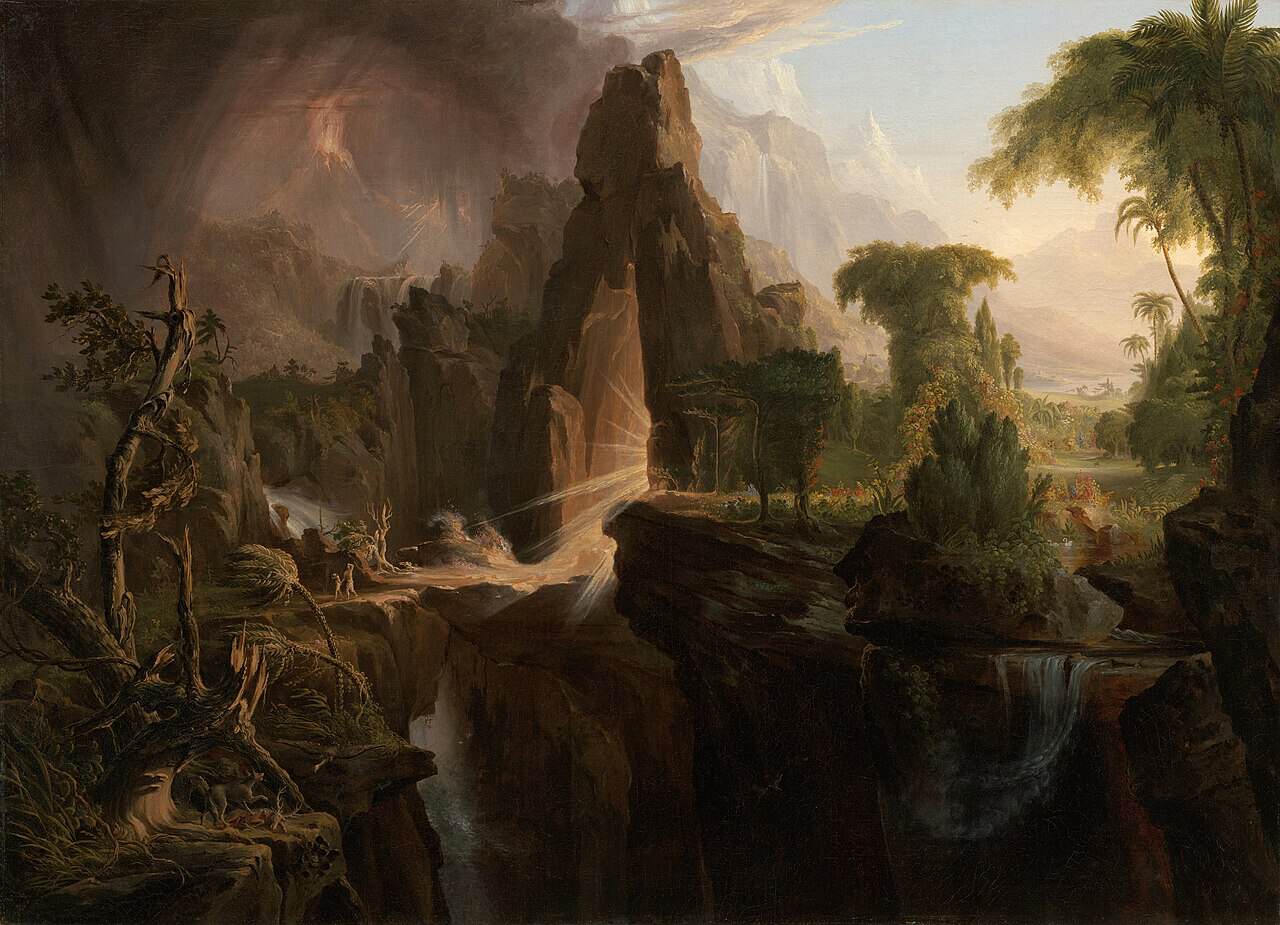
I’m excited to point you to the first example of such “shadows” in God’s Word. After man had fallen into sin, in the midst of God’s judgment pronounced against Adam, Eve, and the serpent, He made a promise that would have eternally redemptive consequences. We read in Genesis 3:15:
I will put enmity between you and the woman, and between your offspring and her offspring; he shall bruise your head, and you shall bruise his heel.
This verse is often called the protoevangelium or “the first gospel,” as it points forward to Jesus Christ, our holy and sinless Redeemer. God speaks of the woman’s offspring that would oppose the offspring of the serpent. The transition from “offspring” to “he” in this verse narrows the interpretation to a singular Redeemer, fulfilled in Jesus Christ, the one who crushes the serpent’s head.
We see in this simple statement the grace of God on full display. Even in the midst of pronouncing judgment on Adam, Eve, and the serpent, He did not leave mankind without hope. He promised a Redeemer who would bring justice and destroy the works of the devil (1 John 3:8), and not only his works, but the devil himself (Hebrews 2:14).
Now, a significant point that helps us determine the identity of the promised “offspring” is that God points to the woman, Eve, and not to Adam. This emphasis is unusual because in ancient times, the offspring of men were the focus of genealogical records. If you read through Genesis 5, 10-11 you see this clearly. Yet, in this verse the woman’s offspring is highlighted.
There are of course various interpretations of this verse, but this small statement seems to be a significant foreshadowing of the virgin birth of Jesus. If we look ahead to Luke 1:35 we read:
And the angel answered her, “The Holy Spirit will come upon you, and the power of the Most High will overshadow you; therefore the child to be born will be called holy—the Son of God.”
The absence of a natural earthly father and the fact that Mary is an unmarried virgin, matches perfectly with the unexpected emphasis on the woman’s offspring of Genesis 3:15. Man would not provide the “seed” to bring about the birth of the Savior, but God himself would “overshadow” Mary and supernaturally keep Jesus from the corruption of an inherited sinful nature. We do not want to take this to an extreme, but there are no wasted statements or emphases in Scripture. Even looking back on Christ’s life, Paul points to the same fact along with the subsequent redemption and adoption in Galatians 4:4:
“But when the fullness of time had come, God sent forth his Son, born of woman, born under the law, to redeem those who were under the law, so that we might receive adoption as sons. And because you are sons, God has sent the Spirit of his Son into our hearts, crying, ‘Abba! Father!’ So you are no longer a slave, but a son, and if a son, then an heir through God.”
The first gospel, or the protoevangelium, comes right at the beginning of the fall of mankind, leaving them with hope in the midst of his own judgment and despair. God is sovereign and He is good. His mercies are ever so sweet and His promises sustain our hearts in the midst of our trouble.
The Image of God Corrupted
To better comprehend the far-reaching consequences of the sin of our first parents, we must recall that the Lord God created man in His own image and likeness (Genesis 1:26-27); not a physical image or likeness, but spiritual likeness. An example we might use would be the relationship between a father and his son. A son will not necessarily bear a perfect resemblance to his dad, but will likely have one or more of the same traits, personality, and/or abilities as his father. There will most probably be a close emotional bond between the two. From the son, we would expect to obey and revere his father, while the father would protect, guide, and discipline with the goal of reproducing his own positive traits in the son.
God’s plan of salvation and reconciliation sprang from the fact that His beloved image and likeness betrayed Him and joined ranks with the enemy, Satan, presented to us in the form of the serpent (Genesis 3:1, Revelation 12:9). In effect, Satan told Eve that their Father had lied to them – that they would not surely die if they should eat from the forbidden fruit; that He was a jealous authoritarian, and afraid that they would promote to His level of knowledge.
This lie was convincing enough for them to eat what God had forbidden. By doing so, they cut the bond/cord between themselves and God, the only source of life. That is why God had warned them: “…of the tree of the knowledge of good and evil you shall not eat, for in the day that you eat of it you shall surely die.” Yes, they still lived physically for many years afterward, but they were cut off from God and experienced a devastating separation in their relationship with Him. With this great sin Adam and Eve not only suffered the due wages of their sin, but they distorted the very image of God whom they were meant to represent here on earth.
God Clothes Adam and Eve
In Genesis 3:21, we read about a very important part of the Gospel of Jesus Christ. After man had sinned by rebelling against God, and had chosen the serpent as his ally, He did not just let them go their own way. In His gracious goodness and love, He still chose to cover their sinful nakedness: “And the LORD God made for Adam and for his wife garments of skins and clothed them.” You would probably say: “How gracious of God! Who would have done that for his (now) enemy?” Yes, you wouldn’t be wrong, but there is much more to it than just that. Think about it a while, and I’ll show you some more consequences – much more…
Firstly, you will agree that, according to the text we have, it is God who killed the first animal. Right? Secondly, it cost an innocent animal (a lamb?) its life in order to cover man’s sinful nakedness and guilt! Now, do you remember that “shadow of things to come”? This event is one of those shadows! Here, God already reveals a part of His long-term plan of salvation for you and me: that innocent, sinless lamb is one of the many pointers to Jesus Christ. That is why John the Baptist introduced Him as such (John 1:29, 36): “The next day he saw Jesus coming toward him, and said, “Behold, the Lamb of God, who takes away the sin of the world!” (You may keep in mind that, wherever the term “Lamb of God” occurs, it refers to Jesus as the slain One.) This is but one way of looking at the Gospel as a whole.
Darkness Before Sunset
As you will have noticed this far, it’s always good to read the Bible in its wider context – meaning to remember the rest of the Bible. As Colossians 2:17 teaches, the “shadows” of the Old Testament find their “substance” in Christ.
So, let’s consider another one of these shadows.
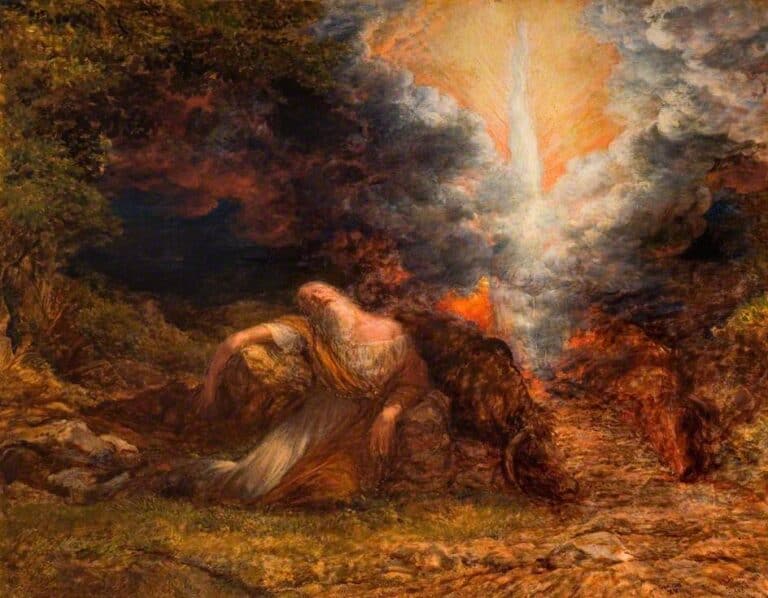
In Genesis 15, God instructs Abram (not yet Abraham – we’ll get to that!) to make the necessary preparations for the “cutting” (formal establishing) of the covenant. We recognize that God makes His covenant with Abraham in the pattern used by the ancient Hittites. Having arranged the animal carcasses, Abram falls asleep and becomes engulfed in “dreadful and great darkness,” even before the sun had set (Gen.15:12).
The ensuing covenant is enacted by God after the sun had set, in the darkness of night. But God doesn’t say anything. How He does it, says everything. Now both parties are supposed to walk the way between those two rows of animal carcasses, which represents our modern-day signing of a contract. But there is a “fine print” here. There is an automatic, unspoken clause to this “signature,” which goes something like this: “I swear to uphold every obligation to this covenant. If I should fail to do so, may I then be accursed and may then happen to me what has happened to these slaughtered animals.”
Now you and I understand that God knows every man to his core. God knew very well that He was dealing with mankind, who is fallible and untrustworthy. The whole history of mankind, right through the Bible, proves this (Psalm 14:3; Job 15:16; Romans 3:10-13). Then why would God want to make a covenant with humankind? What would He gain by it? Ahhh! That’s the whole issue! I’ll explain…
God is not only completely Righteousness, but also truly Love – unshakably steadfast. In His covenant, He offered love, redemption, and forgiveness not for selfish gain, but for our sake. Let’s consider how He went about making the covenant and offering the covenant promises, thereby solving the problem of man’s unworthiness.
I mentioned how both parties are supposed to “sign” the covenant, but the LORD God solved it in His own way; He signed it alone! So, in foresight, by His actions, He promised to take any curse for breaking the covenant for His account. Therefore, Abram and his posterity would be offered redemption by the fact that the curse would be for God’s account. Did you notice? Abram never “co-signed” the covenant by also passing between the laid-out parts of the carcasses. Genesis 15:17 says: “When the sun had gone down and it was dark, behold, a smoking fire pot and a flaming torch passed between these pieces.” Smoke and fire, significant symbols of God’s holy presence, passed between the pieces. This showed His unilateral commitment to the covenant, and foreshadowed two important things: that He knew His covenant would be broken, and that He Himself would bear the consequences of it.
Now you may ask: “So, what does all that mean? What are the consequences? How does this foreshadow anything in the NT? How is Jesus Christ “the substance” of this shadow?”
Let’s consider Jesus Christ on the cross of Calvary. In Mark 15:33-34 we read:
“And when the sixth hour had come, there was darkness over the whole land until the ninth hour. And at the ninth hour Jesus cried with a loud voice, ‘Eloi, Eloi, lema sabachthani?’ which means, ‘My God, my God, why have you forsaken me?’”
This darkness, lasting from the sixth hour (noon) to the ninth hour (3 p.m.), echoes the darkness of Genesis 15. In both instances, darkness signifies the weight of divine judgment. In Genesis, God establishes His commitment to bear the curse, and here in Mark, He honors that promise in the person of Jesus Christ bearing that curse on the cross.
Let’s look at some other aspects surrounding Jesus’ crucifixion and then consider them all together.
In line with His long-term plan of salvation, God had long ago declared that anyone that is hung on a tree is accursed. (Deuteronomy 21:23). Jesus, having been hung from a tree, became a curse for us (Galatians 3:13) crying out as one forsaken by God (Mark 15:34). Another way of understanding what Jesus had done on the cross is mentioned in Colossians 2:13-14: “And you, who were dead in your trespasses and the uncircumcision of your flesh, God made alive together with him, having forgiven us all our trespasses, by canceling the record of debt that stood against us with its legal demands. This he set aside, nailing it to the cross.”
Now, we may connect these two events in the Bible when it grew dark before sunset: The first was the “shadow” in Genesis 15:12 – the day when God, by His actions, promised to take the curse of covenant-breaking for His account. Then later, the “substance” appeared when Jesus hung on that tree for 3 hours, in darkness, before sunset. This was the reality, darkness before sunset when God made good His covenant promise in the person of Jesus Christ, His Son, who bore God’s wrath so that we may be forgiven and redeemed, declared “not guilty” before the heavenly Judge.
The Sacrifice of Isaac
When we read Genesis 22 we realize, considering the wider context of the Bible, that Abraham’s near-sacrifice of his son Isaac is a poignant foreshadowing of God’s sacrifice of His own Son, Jesus. When “God tested Abraham” (Genesis 22:1) by requiring him to sacrifice his only son, Isaac, Abraham did not waver. He obeyed unquestioningly. Even when he had bound Isaac and drawn his knife, he stood by his answer as stated in v.8: “God will provide for Himself the lamb…” And exactly at that moment, God stopped Abraham and told him to let Isaac be and, instead, to sacrifice the ram that had its horns entangled in the thicket nearby.
Just as Isaac was spared and a ram provided as a substitute, God provided His Son, Jesus, to become the substitutionary Lamb who takes away the world’s sins. Later, when we look at Leviticus 16, we will see how miraculously this “piece of the jigsaw puzzle” fits into our perfect picture. Don’t you think it is absolutely breathtaking?
Conclusion
As we have seen, the OT is filled with shadows that point to the substance of Christ in the NT. These shadows are not mere coincidences but are divinely inspired pointers to the ultimate plan of salvation through Jesus Christ. From the promise of the woman’s seed to the garments for Adam and Eve, and the darkness before sunset, each shadow reveals a deeper understanding of God’s love, redemption, and forgiveness. Space prevents us from exploring additional threads of the gospel in Genesis, but consider also the story of Joseph’s rejection, suffering and ultimate exaltation (Genesis 37-50) foreshadowing Christ’s salvation of God’s people.
By recognizing these shadows and understanding their significance, we can deepen our faith and draw closer to our Savior. The Bible is a beautiful tapestry woven together by God’s hand, and each thread points us to Jesus. May these examples bolster your faith and adoration for Him. May they increase your love for Him, and may you continue to discover more shadows that reveal the substance of Christ.
Lastly, a word of comfort. If you, my brother/sister in Christ, have been touched by this message, and you consider yourself as unworthy, I want to remind you that even the great apostle, Paul, saw himself as stumbling ever so often. He even admits that he often says and does things that he shouldn’t have, and that he omits what he should have done. If you read Romans 7:7-25, you will see that every one of us is ever so fallible, but remember that God alone knows your heart as well as your weaknesses. Through Christ, we are redeemed and declared righteous. Let us together adore, worship, and love Him, proclaiming His gospel to all.
Continue to Part 3…
Read the next article in our Series: The Crimson Thread: Part 3 – Gospel Hope From Exodus to Malachi