
The Nicene Creed
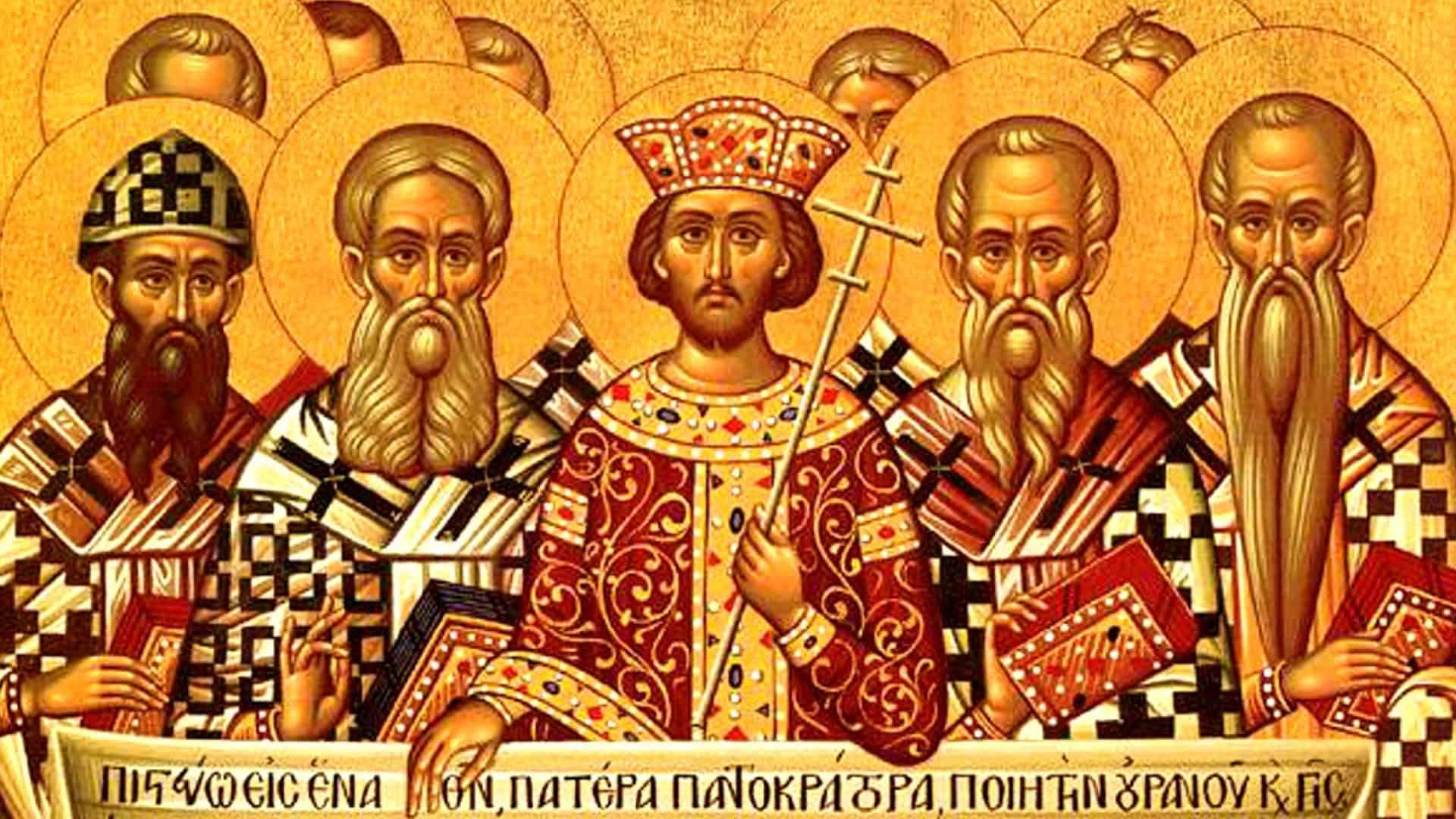
The Nicene Creed was initially formulated at the First Council of Nicaea (325 AD) to deal with various heresies, particularly the Arian heresy which denied Christ’s full divinity. The Nicene creed affirms Christ’s divinity, declaring Him “of one Being with the Father” (homoousios). It was later revised and expanded at the First Council of Constantinople (381 AD), and was thereafter known as the Niceno-Constantinopolitan Creed. This creed is widely accepted as a foundational statement of the true Christian faith. The English version below is translated from the original Greek text of the Niceno-Constantinopolitan Creed (381 AD).
Text of The Nicene Creed
We believe in one God,
the Father Almighty
Maker of heaven and earth,
and of all things visible and invisible;
And in one Lord, Jesus Christ,
the only-begotten Son of God,
begotten from the Father before all ages,
Light from Light,
true God from true God,
begotten, not made,
of one essence with the Father,
through whom all things came to be;
who for us men and for our salvation descended from the heavens,
and was incarnate from the Holy Spirit and the Virgin Mary,
and became man;
and was crucified for us under Pontius Pilate,
and suffered, and was buried,
and rose on the third day according to the Scriptures,
and ascended into the heavens,
and is seated at the right hand of the Father,
and is coming again with glory to judge the living and the dead,
whose kingdom shall have no end;
And in the Holy Spirit, the Lord and Life-giver,
who proceeds from the Father,1
who with the Father and the Son is worshiped and glorified,
who spoke through the prophets;
In one holy, catholic, and apostolic Church;
We confess one baptism for the remission of sins;
We look for the resurrection of the dead,
and the life of the age2 to come. Amen.
- In the 6th century, “and from the Son” (known as the filioque clause) was added here but is not part of the original Nicene Creed (325 AD) or the Niceno-Constantinopolitan Creed (381 AD). ↩︎
- Many modern translators use “world” here, but μέλλοντος αἰῶνος (mellontos aiōnos) is a genitive construction meaning “the coming age” or “the age to come,” referring to the eschatological future, or the eternal state of life with God after the resurrection. ↩︎