The Athanasian Creed
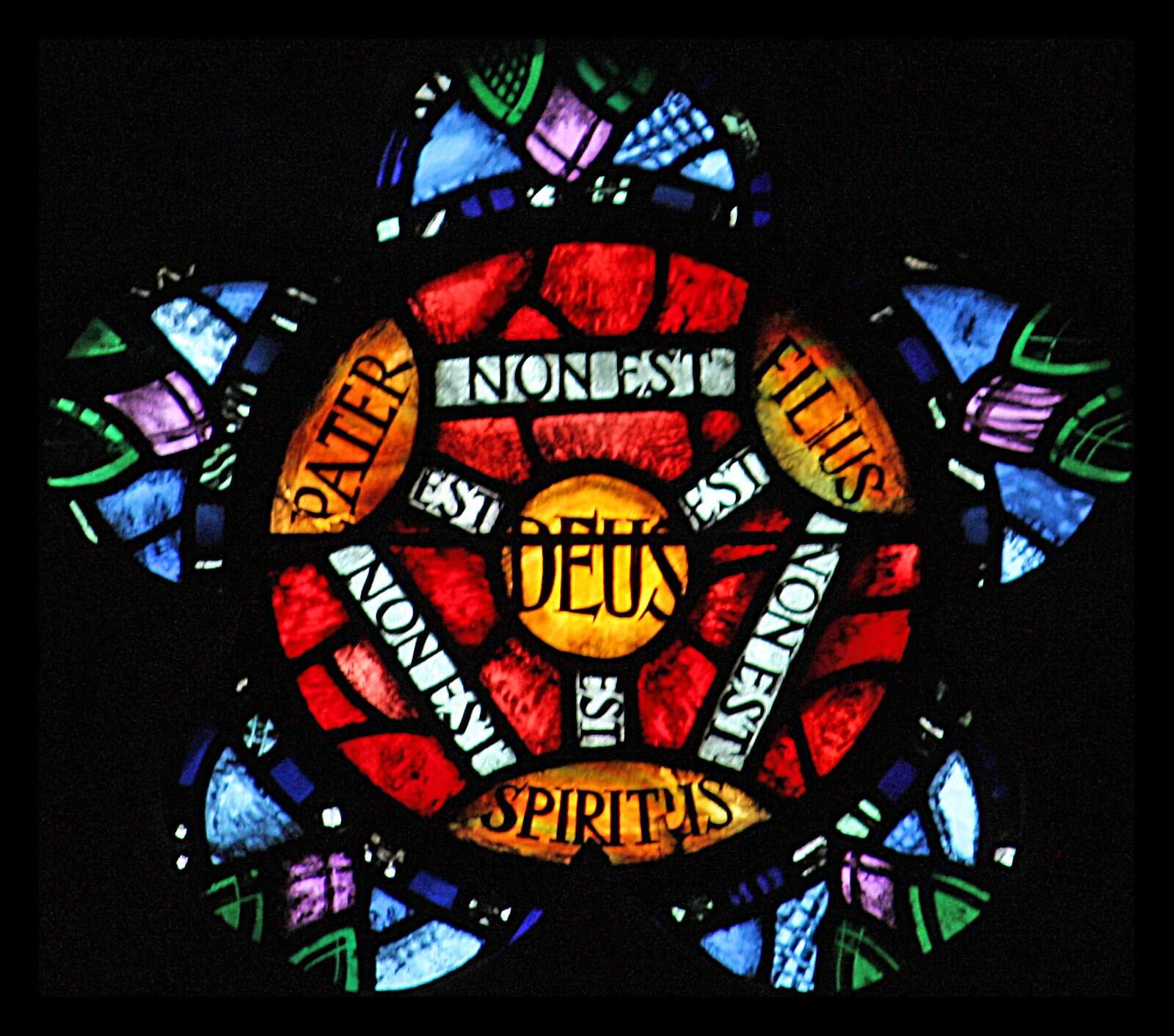
The Athanasian Creed is a historic Christian confession, likely composed in the 5th or 6th century, that defines the orthodox understanding of the Trinity and the Incarnation. Traditionally associated with Athanasius of Alexandria, though not authored by him, it emphasizes the unity of one God in three coequal, coeternal Persons—Father, Son, and Holy Spirit—while maintaining their distinctness, and affirms Jesus Christ as fully divine and fully human in one Person. The term “catholic” in the creed denotes the universal Christian faith, not the Roman Catholic Church. Used primarily in Western Christian traditions, this creed, alongside the Nicene and Apostles’ Creeds, serves as a foundational statement of belief, stressing the necessity of these doctrines for salvation.
Text of The Athanasian Creed
Whosoever will be saved, before all things it is necessary that he hold the catholic1 faith. Which faith unless every one do keep whole and undefiled, without doubt he shall perish everlastingly.
And the catholic faith is this: that we worship one God in Trinity, and Trinity in Unity; neither confounding the Persons, nor dividing the Substance. For there is one Person of the Father; another of the Son; and another of the Holy Ghost. But the Godhead of the Father, of the Son, and of the Holy Ghost, is all one; the Glory equal, the Majesty coeternal. Such as the Father is; such is the Son; and such is the Holy Ghost. The Father uncreated; the Son uncreated; and the Holy Ghost uncreated. The Father unlimited; the Son unlimited; and the Holy Ghost unlimited. The Father eternal; the Son eternal; and the Holy Ghost eternal. And yet they are not three eternals; but one eternal. As also there are not three uncreated; nor three infinites, but one uncreated; and one infinite. So likewise the Father is Almighty; the Son Almighty; and the Holy Ghost Almighty. And yet they are not three Almighties; but one Almighty. So the Father is God; the Son is God; and the Holy Ghost is God. And yet they are not three Gods; but one God. So likewise the Father is Lord; the Son Lord; and the Holy Ghost Lord. And yet not three Lords; but one Lord. For like as we are compelled by the Christian verity; to acknowledge every Person by himself to be God and Lord; So are we forbidden by the catholic religion; to say, There are three Gods, or three Lords.
The Father is made of none; neither created, nor begotten. The Son is of the Father alone; not made, nor created; but begotten. The Holy Ghost is of the Father and of the Son; neither made, nor created, nor begotten; but proceeding. So there is one Father, not three Fathers; one Son, not three Sons; one Holy Ghost, not three Holy Ghosts. And in this Trinity none is before, or after another; none is greater, or less than another. But the whole three Persons are coeternal, and coequal. So that in all things, as aforesaid; the Unity in Trinity, and the Trinity in Unity, is to be worshipped. He therefore that will be saved, let him thus think of the Trinity.
Furthermore, it is necessary to everlasting salvation; that he also believe faithfully the Incarnation of our Lord Jesus Christ. For the right Faith is, that we believe and confess; that our Lord Jesus Christ, the Son of God, is God and Man; God, of the Substance of the Father; begotten before the worlds; and Man, of the Substance of his Mother, born in the world. Perfect God; and perfect Man, of a reasonable soul and human flesh subsisting. Equal to the Father, as touching his Godhead; and inferior to the Father as touching his Manhood. Who although he is God and Man; yet he is not two, but one Christ. One; not by conversion of the Godhead into flesh; but by assumption of the Manhood into God. One altogether; not by confusion of Substance ; but by unity of Person. For as the reasonable soul and flesh is one man; so God and Man is one Christ; Who suffered for our salvation; descended into hell; rose again the third day from the dead. He ascended into heaven, he sitteth on the right hand of God the Father Almighty, from whence he will come to judge the living and the dead. At whose coming all men will rise again with their bodies; And shall give account for their own works. And they that have done good shall go into life everlasting; and they that have done evil, into everlasting fire.
This is the catholic faith; which except a man believe truly and firmly, he cannot be saved.
- The term “catholic” means universal, referring to the universal Christian faith and not to the Roman Catholic church. ↩︎